

CNC Machinists, which stands for Computer Numerical Control machining, is just one of the high-demand manufacturing positions that will account for a projected 2.1 million unfilled roles by 2030, according to the Bureau of Labor Statistics.
CNC machining is an automated manufacturing technology that utilizes pre-programmed CAD/CAM software to direct high-precision machine tools. By subtractively removing material from a solid workpiece, this process produces intricate, identical components in metal or plastic. It eliminates the margin for human error, delivering the superior accuracy and efficiency required by the aerospace, automotive, and medical sectors.
CNC is used to operate a range of complex machinery, such as grinders, lathes, turning mills, lasers, and routers, which cut, shape, and create various parts and prototypes.
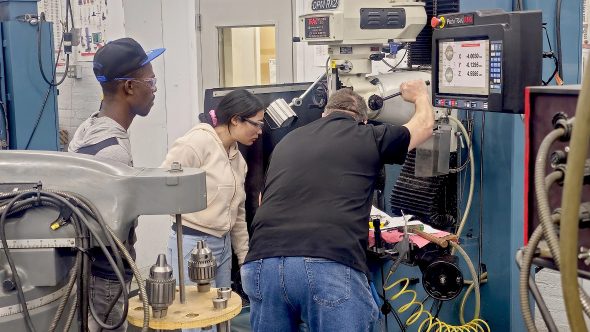
Key Aspects of CNC Machining
CNC machining is unique in that it is a subtractive process that uses highly precise, computer-guided automation. Here are the three key aspects of the CNC machining process.
Subtractive Process
Unlike 3D printing, which is an additive process, CNC machining uses subtraction to create an object. In other words, the process begins with a solid block of material and the machine cuts away at it using drills of different varieties to shape it into a final product.
Computer-Guided Automation
To bridge the gap between design and manufacturing, software converts 3D models into a set of instructions called G-code. This code serves as the machine’s “brain,” automatically controlling every movement, from the speed of the drill to the path it takes, to ensure rapid and consistent production.
High Precision Movements
The CNC machine follows G-code instructions, executing precise movements to cut away material and shape the part. Some jobs may require manual tool changes or repositioning.
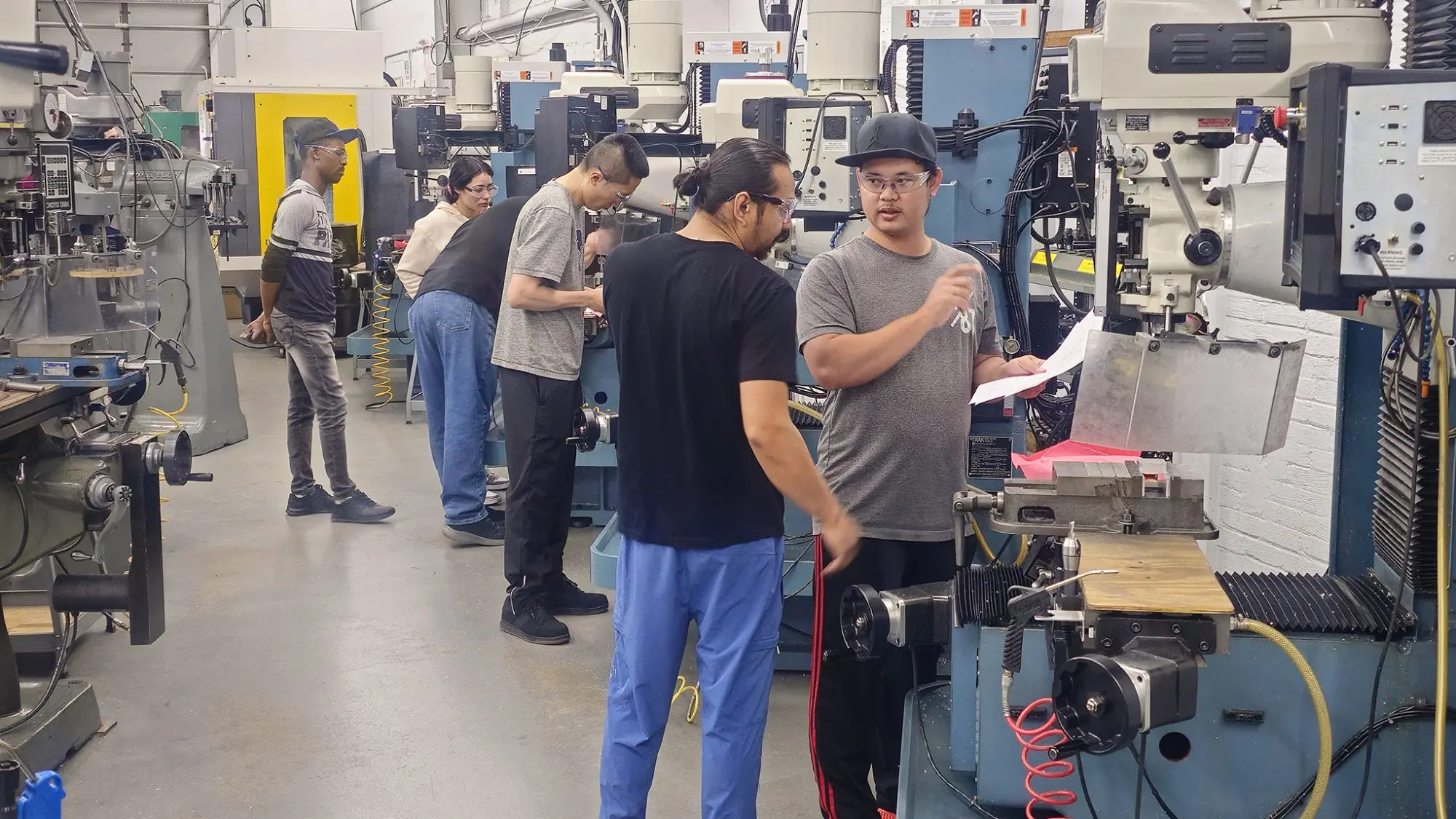
Industries That Rely on CNC Machining Services
Several industries rely heavily on CNC machining to produce products. These include:
Aerospace & Defense:
CNC machining is used in aircraft components, missile systems, and spacecraft manufacturing, with lightweight, high-strength materials such as aluminum and titanium.
Automotive Manufacturing:
The fabrication of engine parts, transmission components, and chassis depends on CNC milling and precision turning.
Medical & Healthcare:
The healthcare industry relies on CNC milling to produce surgical tools and prosthetics that require micron-level accuracy.
Electronics & Semiconductor Industry:
CNC machining enables precise micromachining of circuit boards, heat sinks, and precision connectors.
CNC machining is a foundational, high-precision process essential for creating critical components across industries like aerospace, automotive, and medical technology. Given the projected demand for skilled CNC machinists, securing this expertise is key to a stable and lucrative career. Take the first step toward securing your future: visit AMTEP today to find out more about the free training classes available and launch your career in precision manufacturing.